AQUA D PURE UV Water Purifier With Faucet And 15 Litre Tank Review: A Smart Buy for Municipal Water or a Risky Pick?

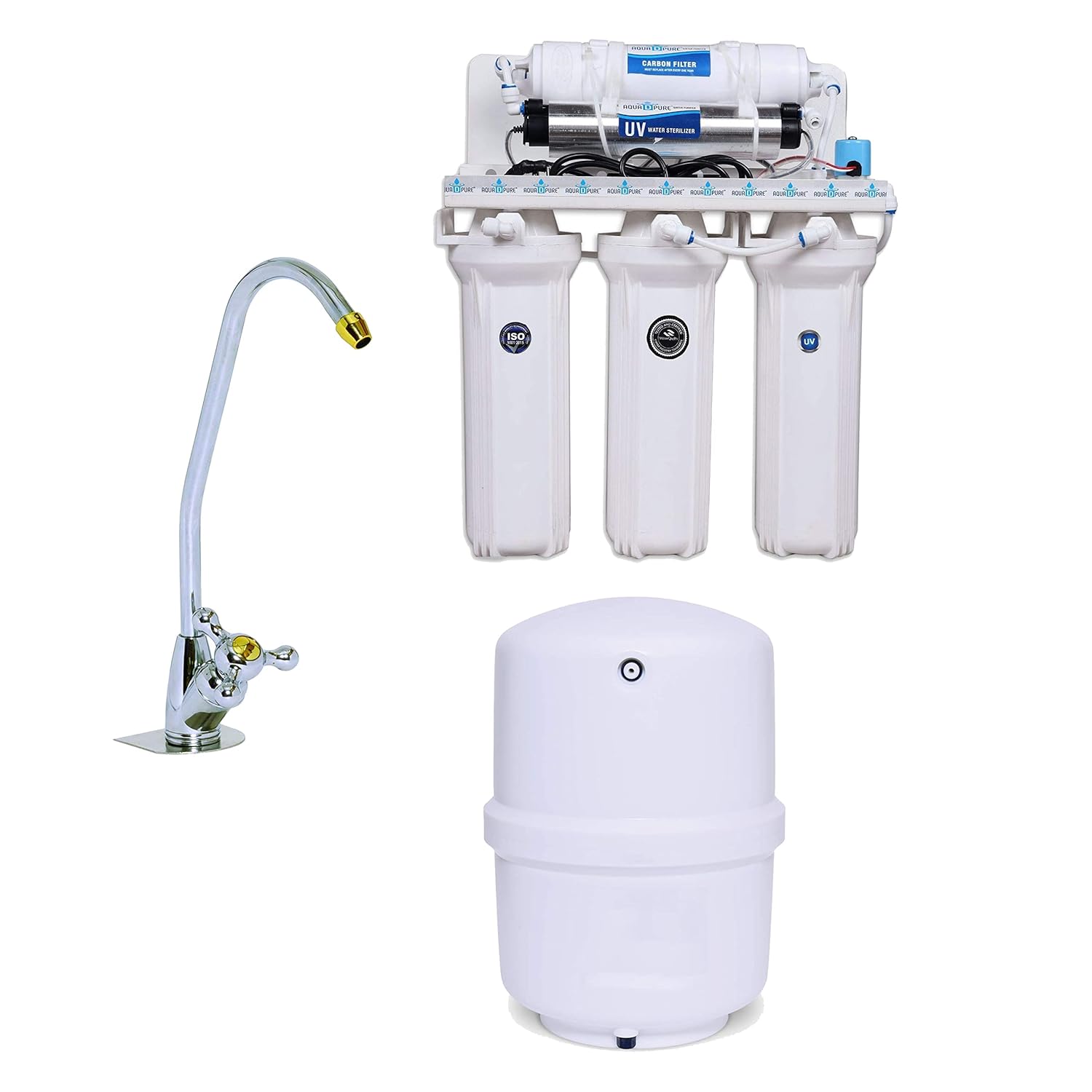
If you are looking for an affordable under-sink water purifier with a separate faucet and a large storage tank, the AQUA D PURE UV Water Purifier With Faucet And 15 Litre Tank is one of the products that quickly grabs attention. It promises UV purification, no RO, no booster pump, no TDS reduction, and no water wastage, which makes it very different from a typical RO purifier.
But does that make it the right purifier for your home?
In this detailed review, I will break down what this purifier offers, where it performs well, where it can disappoint, and who should actually consider buying it.
Check the latest price here:
Quick Verdict
The AQUA D PURE UV Water Purifier With Faucet And 15 Litre Tank is best suited for homes that already receive relatively clean municipal water and do not need TDS reduction. Its biggest strengths are the 15-litre hydro-pneumatic storage tank, under-sink design, and the fact that it avoids the water wastage commonly associated with RO purifiers.
However, this is not the right choice for borewell water, tanker water, or very high-TDS water. If your water quality is inconsistent, this purifier can become a weak fit because UV and UF purification do not solve high salinity or dissolved solids problems the way RO systems do.
What Makes This Water Purifier Different?
Most buyers compare every purifier to RO models, but this AQUA D PURE unit takes a different approach.
Key Highlights
- Under-sink or wall-mount style installation
- Separate faucet for a cleaner kitchen look
- 15-litre hydro-pneumatic pressure tank
- UV purification
- No RO
- No booster pump
- No TDS reduction
- No water wastage
That combination tells you exactly what kind of buyer this product is designed for: someone who wants a cleaner, dedicated drinking-water setup without the complexity and wastage of a standard RO purifier.
Design and Build Quality
One of the most practical things about this purifier is its under-sink format. If you do not like bulky wall-mounted purifiers on display, this layout is immediately appealing. The purifier can stay tucked away, while the faucet gives you a neater and more premium-looking water dispensing setup.
The 15-litre tank is another major selling point. For medium to large families, this storage size is useful because it reduces the need for constant refilling cycles. A hydro-pneumatic pressure tank can also help provide a more consistent flow from the dedicated faucet, which feels more convenient than basic gravity-fed setups.
The product positioning also suggests a compact form factor for kitchens where visible appliance clutter is a problem.
Purification Technology Explained
This is where buyers need to be very careful.
It Uses UV Purification, Not RO
That means this purifier is mainly intended to deal with microbial contamination, not to reduce dissolved salts, hardness, or TDS.
What “No RO, No TDS Reduction” Really Means
This line can be a benefit or a problem depending on your water source.
Good news:
- Your water taste is less likely to become flat or overly stripped
- There is no RO reject-water wastage
- You avoid the extra pump and membrane complexity of RO systems
Bad news:
- If your input water has high TDS, hardness, or excess dissolved impurities, this purifier is not enough
- It is not the best choice for many borewell or tanker-water households
So the product makes sense only if your water is already fairly decent and you mainly want a dedicated purification step without altering TDS.
Who Should Buy This Purifier?
This product makes the most sense for:
1. Homes using municipal water
If your local supply is already treated and your main concern is an extra hygiene layer before drinking, this purifier is a sensible budget-friendly option.
2. Buyers who want an under-sink setup
Not everyone wants a visible purifier mounted in the kitchen. This model is better for cleaner kitchen aesthetics.
3. Families needing bigger storage
A 15-litre tank is one of the stronger practical advantages here.
4. People who specifically want to avoid RO water wastage
If you dislike the water rejection of RO systems and your source water does not require RO, this purifier becomes more attractive.
Who Should Avoid It?
You should skip this model if:
1. Your home uses borewell or tanker water
In that case, an RO-based purifier is usually a safer choice.
2. Your water has high TDS
This purifier clearly does not reduce TDS, so it will not solve that problem.
3. You want an all-in-one advanced purification system
If you expect RO + UV + UF + TDS control, this is not that kind of machine.
4. You want a purifier with less installation dependency
Under-sink models and separate faucet systems can be more installation-sensitive than standard wall units.
Real-World Pros and Cons
Pros
Large 15-litre tank
This is one of the biggest practical benefits for family use.
Under-sink design looks cleaner
A great option for modular kitchens and minimal visible clutter.
No water wastage
A meaningful advantage over RO systems for the right water source.
No taste stripping
Because there is no RO, the natural taste profile of low-TDS water is usually retained better.
Separate faucet setup
This can feel more premium and convenient in daily use.
Cons
Not suitable for all water sources
This is the biggest drawback. Many Indian homes still need RO-level purification depending on the location.
No TDS reduction
That is a deal-breaker for buyers dealing with salty or hard water.
Installation expectations matter
Under-sink models are not always plug-and-play in the way buyers imagine.
Long-term maintenance depends heavily on input water quality
If the source water is poor, filter life and satisfaction can drop faster.
Performance: Is It Good Enough for Daily Use?
For the right household, yes.
If your water supply is already relatively clean and your goal is to get:
- a hidden purifier setup,
- dedicated purified water dispensing,
- large storage,
- and no RO water wastage,
then this model can absolutely work well.
But the phrase “for the right household” matters a lot here. This is not a universal recommendation. The biggest mistake buyers make is choosing a purifier based on price and tank size without matching it to actual water quality.
If your water source is not a good match, even a product that looks like a bargain can feel like a bad buy very quickly.
Installation, Warranty, and Ownership Expectations
A purifier like this should be bought with realistic expectations.
What to keep in mind before buying
- Measure your under-sink space properly
- Confirm your water source type
- Check whether you already know your approximate TDS level
- Expect periodic filter maintenance like any other purifier
- Verify installation logistics in your area before ordering
Warranty coverage for this model family is typically described around electrical parts, while filters remain consumables and are affected by source water quality. That means your long-term experience will depend heavily on how suitable your water is for this kind of purifier.
See the latest product page here:
Is AQUA D PURE UV Water Purifier Worth Buying in 2026?
Yes, but only for a specific kind of buyer.
This is not the best purifier for everyone. It is a situationally good purchase.
Buy it if:
- You have municipal water
- You do not need RO
- You want an under-sink purifier
- You want a 15-litre storage tank
- You want to avoid water wastage
Do not buy it if:
- You need TDS reduction
- You use borewell or tanker water
- You want a broader purification setup for unpredictable water quality
Final Verdict
The AQUA D PURE UV Water Purifier With Faucet And 15 Litre Tank stands out because it solves a very specific need: a neat under-sink purifier with large storage for homes that already have low-TDS water and do not want RO wastage.
That makes it a practical option for some homes, but a poor fit for others.
So the right question is not “Is this a good water purifier?”
The right question is “Is this the right purifier for my water source?”
If your answer is yes, this model offers a useful mix of storage, convenience, and cleaner kitchen aesthetics at a price point that looks attractive. If your answer is no, you are better off choosing an RO-based alternative instead of forcing the wrong purifier into the wrong setup.
Check availability and latest pricing:


