Aquadpure UV Water Purifier 5 Stage Review: A Smart Buy for Homes That Want Natural-Tasting Water Without RO?

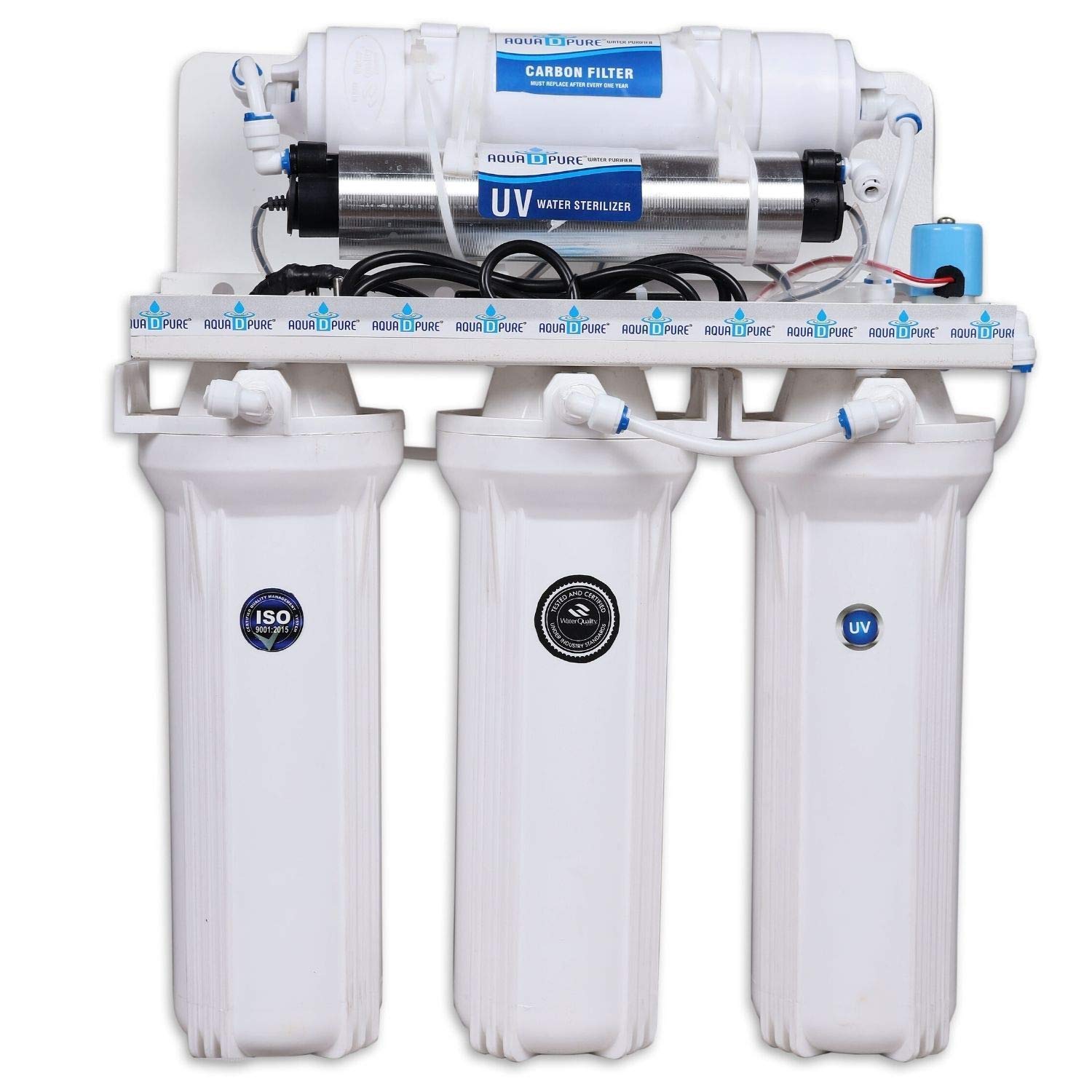
If you are searching for an affordable under-sink water purifier that does not strip away the natural taste of water, the Aquadpure UV Water Purifier 5 Stage is one of the more interesting options currently listed online in India. It is positioned as a 5-stage UV water purifier with under-sink or wall-mounted installation, no RO, no booster pump, and a high-flow design aimed at homes that want purified water without the usual RO-style water wastage.
For buyers who already know their input water is municipally treated and does not need TDS reduction, this purifier immediately stands out for one simple reason: it focuses on UV purification and filtration rather than aggressive mineral stripping. That makes it potentially appealing for people who prefer a more natural water taste and want a compact purifier for the kitchen.
Quick Verdict
The Aquadpure UV Water Purifier 5 Stage looks best suited for households that:
- get relatively low-TDS municipal water
- want a compact under-sink or wall-mount setup
- do not want RO wastewater
- prefer natural-tasting water over demineralized RO taste
- want a budget-friendly purifier for everyday use
It is not the right pick for every home. If your incoming water has high TDS, borewell contamination, or requires heavy dissolved-solids reduction, a non-RO model like this may not be enough.
Buy Now
What Is the Aquadpure UV Water Purifier 5 Stage?
Based on live listing data, this model is marketed as an Aquadpure UV Water Purifier 5 Stage with under-sink/wall-mounted installation, no RO, no booster pump, and a 35L / roughly 30–35 LPH class output positioning. The same model family is also described elsewhere as having no TDS reduction and no water wastage, which is consistent with the no-RO positioning.
In practical terms, that means this purifier is built for buyers who want:
1. Purification without RO-style water rejection
RO purifiers often waste water during filtration. This one is positioned as a system that avoids that drawback.
2. Better natural taste retention
Because it does not appear to use RO for TDS reduction, water is less likely to lose its original mineral character and taste profile.
3. Flexible installation
The under-sink/wall-mounted format makes it useful for modular kitchens, smaller homes, and users who want a cleaner countertop.
Key Features That Matter in Real Use
5-Stage Filtration Setup
A 5-stage configuration usually means the purifier is designed to remove sediment, reduce visible impurities, and disinfect water through UV treatment. For a budget category model, that is a practical balance between filtration depth and cost.
UV Purification
UV is especially relevant when the goal is to handle microbial safety without changing the taste of water too much. This can be a good fit for homes using treated municipal water where bacterial control is a concern, but deep TDS correction is not the main issue.
No RO, No Booster Pump
This is one of the biggest selling points. No RO means:
- no major water wastage associated with RO reject water
- no strong reduction in TDS
- a more natural water taste for suitable water sources
No booster pump can also mean a simpler setup in compatible plumbing conditions, though actual performance will still depend on your home’s inlet pressure.
Under-Sink or Wall-Mounted Design
This style is useful if you want a cleaner kitchen look. It keeps the unit out of the way and can work well for compact spaces.
Claimed High Output
The product is positioned online around the 30–35 liters per hour / 35L class. For many households, that suggests it is intended to deliver water faster than slower gravity-based alternatives.
Aquadpure UV Water Purifier 5 Stage Review: Performance Analysis
Water Taste
This is where this purifier may appeal most to the right buyer. Since it is not pitched as an RO purifier, it should be better aligned with users who dislike the flatter taste often associated with RO-treated water. The listing language itself emphasizes “natural taste,” which supports that positioning.
Everyday Convenience
A purifier in this category is more about practical daily use than premium extras. You are not buying it for smart features, app control, or advanced digital indicators. You are buying it for:
- straightforward purification
- space-saving installation
- quick access to drinking water
- low complexity compared with many full-featured RO systems
Best Use Case
This purifier makes the most sense if your home gets:
- municipal or pretreated supply
- relatively low to moderate TDS water
- water that needs purification but not heavy dissolved-solids correction
That is the key point. Buyers often make the mistake of choosing a purifier based on price alone. In reality, the right purifier depends first on your source water.
What Live Buyer Feedback Suggests
The live Amazon search snippet visible for this exact product showed a 5.0 out of 5 rating from 2 global ratings at the time I checked. That is a positive signal, but it is also a very small review base, so it should not be over-weighted.
A live review surfaced for the same product model elsewhere described it as:
- easy to install
- working well after about 15 days of use
That feedback is encouraging for first impressions and ease of setup, but it is still limited. It tells us more about early usability than long-term durability.
So the balanced takeaway is this:
Positives from currently visible feedback
- simple installation appears to be a recurring positive
- initial use experience seems satisfactory
- value-for-money perception looks good in early feedback
What is still unclear
- long-term filter life in real homes
- service quality across cities
- consistency across different water sources
- durability after several months of use
Pros and Cons
Pros
- Under-sink or wall-mounted design saves kitchen space
- No RO means no major water wastage
- Better fit for those who prefer natural-tasting water
- UV-based purification can be useful for treated supply water
- Simpler positioning than many complicated purifier models
- Budget-friendly category appeal
Cons
- Not ideal for high-TDS or borewell-heavy water conditions
- Very limited visible review volume right now
- Not the best choice if you specifically need TDS reduction
- Long-term service and maintenance experience is still not very clear from currently visible feedback
Who Should Buy This Water Purifier?
You should consider the Aquadpure UV Water Purifier 5 Stage if:
You use municipal water
This is the most logical buyer profile.
You do not want RO wastewater
Many users are now specifically looking for non-RO options because of water wastage concerns.
You prefer water that tastes more natural
If you dislike the taste change that some RO purifiers create, this model may be more appealing.
You want a compact purifier for a modular kitchen
The under-sink or wall-mounted format is practical for modern kitchens.
Who Should Skip It?
You may want to skip this purifier if:
Your water has high TDS
A no-RO purifier is usually not the best tool for that job.
You rely on borewell water with more challenging contamination
You may need a more advanced purification setup, often with RO and possibly additional treatment layers.
You want a feature-rich purifier
If you want digital indicators, storage tank features, smart alerts, or premium after-sales confidence, you may want to compare with more established brands.
Installation and Maintenance Expectations
Based on the currently visible product references, the purifier appears to come with an installation kit and is positioned as relatively easy to install. That said, actual installation experience can vary depending on your sink layout, water inlet compatibility, and whether you use a technician.
As with any purifier in this class, maintenance matters just as much as the initial price. Filters and UV-related components need timely servicing to keep performance consistent. Before buying, it is smart to confirm:
- replacement filter availability
- service support in your city
- recommended maintenance cycle
- actual warranty terms on the listing page
Price-to-Value Analysis
This model looks like a value-driven purifier rather than a premium one. That is exactly why it may attract buyers in 2026. Many shoppers are no longer looking only for the most advanced purifier. They are looking for the right purifier for their water type, and a simpler UV-based system can be the smarter purchase when RO is unnecessary.
If your water source matches this purifier’s strengths, the value proposition becomes much stronger:
- lower upfront spend
- less complexity
- no RO water wastage
- more natural-tasting drinking water
Buy Now
Final Verdict: Is Aquadpure UV Water Purifier 5 Stage Worth Buying?
The Aquadpure UV Water Purifier 5 Stage looks like a sensible buy for a very specific type of household: one that needs UV-based purification, wants no RO wastage, and already has a water source that does not require TDS reduction.
That is the most important thing to understand before purchasing.
If your incoming water is suitable, this purifier offers a practical combination of:
- natural-tasting water
- compact installation
- straightforward operation
- budget-friendly positioning
If your water quality is more challenging, you should not buy this just because it is affordable. In that case, a more advanced RO-based purifier would likely be the safer long-term decision.
For the right home, though, this could be a smart, no-nonsense purchase.
Frequently Asked Questions
Is Aquadpure UV Water Purifier 5 Stage good for home use?
Yes, it appears suitable for home use where the water source is already relatively suitable for non-RO purification, especially municipal supply.
Does this purifier reduce TDS?
Live product references for this model indicate no TDS reduction, so it should not be treated as a substitute for an RO purifier where TDS correction is needed.
Does Aquadpure UV Water Purifier waste water?
The product is positioned online as having no water wastage, which aligns with its non-RO setup.
Is it suitable for borewell water?
Not automatically. If your borewell water has high TDS or needs dissolved-solids reduction, a no-RO purifier may not be sufficient.
Is the installation difficult?
Currently visible feedback suggests installation is relatively easy, but actual setup can depend on your plumbing and kitchen layout.


